
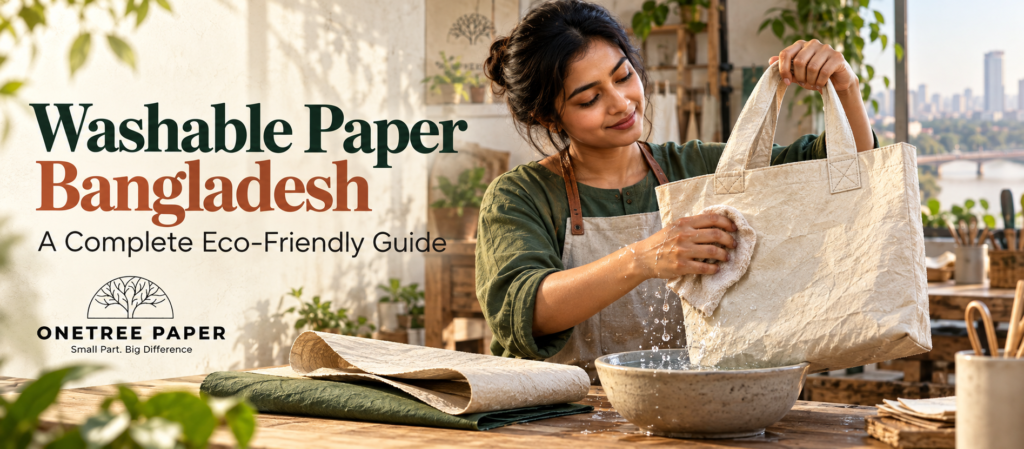
What if a paper bag could survive your washing machine?
It sounds odd. Paper and water usually don’t mix. But washable paper changes that rule. It looks like paper, feels like soft leather or fabric, and holds up after a wash.
Interest in washable paper Bangladesh buyers can use is growing fast. People want options that cut plastic and save trees. This guide shows you what washable paper is, how to use it, and how to care for it. You will also learn how eco friendly paper helps the planet and how OneTreePaper supports that goal.
What Is Washable Paper?
Washable paper is a strong, flexible material made mostly from cellulose fibers. These fibers come from wood pulp. Makers treat and bond them so the sheet resists tearing and water.
It is often called washable kraft paper. The surface looks wrinkled and feels like fabric. You can fold it, sew it, cut it, and wash it.
Here is what sets it apart from regular paper:
- Tear-resistant: It does not rip easily.
- Water-friendly: It survives light washing and spills.
- Flexible: It bends without cracking.
- Reusable: You can use it again and again.
- Recyclable: You can recycle it at the end of its life, depending on the coating and local options.
Because it lasts so long, one piece can replace many single-use items.
Why Washable Paper Bangladesh Buyers Are Choosing It Now
Bangladesh has a long history of acting on plastic. In 2002, it became the first country to ban thin polythene shopping bags. Yet plastic waste still clogs drains and rivers, especially in dense cities like Dhaka and Chattogram.
That is one reason washable paper Bangladesh shoppers are paying attention. They want something that works like plastic but does less harm.
Here are the main reasons people switch:
- Plastic reduction. Washable paper can replace plastic bags, pouches, and organizers.
- Durability. You use it many times, so you buy less.
- Style. It has a clean, natural look that suits modern homes and shops.
- Local fit. Bangladesh has strong craft, tailoring, and garment skills. Washable paper works well with all three.
- Awareness. More people understand the environmental impact of paper and plastic.
Small shops, cafés, and boutiques also use it for branded packaging. It tells customers that the business cares about the planet.
The Environmental Impact of Paper
To see why eco friendly paper matters, start with the problem.
Making paper takes trees, water, and energy. Forests absorb carbon dioxide and shelter wildlife. When forests shrink, the climate and local ecosystems suffer.
How Paper Production Affects Nature
Regular paper production touches the environment in several ways:
- Deforestation: Cutting trees for pulp reduces forest cover.
- High water use: Pulping and bleaching use large amounts of water.
- Energy use: Mills need power to run, often from fossil fuels.
- Chemical pollution: Bleaching can release harmful waste if poorly managed.
- Landfill waste: Paper that is thrown away can release methane as it breaks down.
None of this means you should stop using paper. It means you should use it wisely.
Where Washable Paper Fits
Washable paper helps because it is made to last. A single-use paper bag may serve you once. A washable paper bag can serve you for months.
That longer life means fewer items made, fewer trees cut, and less trash. This is the heart of tree saving paper: get more use from every fiber.
“The greatest threat to our planet is the belief that someone else will save it.” — Robert Swan
Choosing better materials is one small way to act on that idea.
Recycled Paper Benefits
Many sustainable paper products use recycled fiber. Recycled paper means used paper is collected, cleaned, and turned into new sheets.
The recycled paper benefits are clear.
1. It Saves Trees
Recycled fiber replaces some fresh wood pulp. Industry sources often say that recycling one ton of paper can save around 17 trees. The exact number depends on the paper and process, but the direction is clear: recycling means fewer trees cut.
2. It Uses Less Energy and Water
Making paper from recycled fiber generally takes less energy and water than making it from raw wood. That also lowers the carbon footprint.
3. It Keeps Waste Out of Landfills
Paper makes up a large share of household and office trash. Recycling gives it a second life instead of a trip to the dump.
4. It Supports a Circular Economy
In a circular economy, materials stay in use as long as possible. Paper is one of the easiest materials to keep in that loop.
5. It Cuts Pollution
Less raw pulping and less landfill waste mean lower emissions and less strain on local environments.
| Benefit | What It Means for You |
|---|---|
| Saves trees | Protects forests and wildlife |
| Lower energy use | Smaller carbon footprint |
| Less water use | Helps protect water resources |
| Less landfill waste | Cleaner cities and drains |
| Circular use | Materials stay useful longer |
How OneTreePaper Supports Tree Saving Paper Solutions
OneTreePaper is built around a simple idea: protect trees by using paper smarter.
Here is how the brand supports that goal.
Durable Products That Replace Single-Use Items
A washable item that lasts for months cuts demand for throwaway products. That is the most direct way to save trees. When you reuse a bag 50 times, you avoid making 49 other bags.
Focus on Sustainable Paper Products
OneTreePaper promotes sustainable paper products that are made to be reused, repaired, and recycled. These include practical items for daily life, from storage to packaging.
Awareness and Education
Good products need good information. OneTreePaper shares tips on how to reduce paper waste, how to care for washable items, and why recycled fiber matters. Informed buyers make better choices.
Plastic Alternatives for Bangladesh
With plastic pollution still a serious issue, local alternatives matter. Washable paper gives shops and families a lighter-footprint option that fits everyday needs.
How to Use Washable Paper (Step-by-Step Guide)
Washable paper is easy to work with. Follow these steps to get started.
Step 1: Choose Your Project
Pick something simple first. Good beginner ideas include:
- Tote bags
- Pencil cases
- Wallets and card holders
- Plant pots and planters
- Storage baskets
- Gift bags
- Lampshades
- Table mats
Step 2: Gather Your Tools
You need only a few items:
- Washable paper sheets or rolls
- Sharp scissors
- A ruler and pencil
- Strong thread and a sewing machine (or a needle)
- Fabric glue (optional)
- A heavy needle for thick layers
Step 3: Wet and Crumple the Paper (Optional)
Some people lightly dampen and crumple the paper to make it softer. This gives a leather-like texture. Let it dry flat before cutting.
Step 4: Measure and Cut
Mark your shape with a pencil. Cut with sharp scissors. Clean edges make sewing easier.
Step 5: Sew or Glue
Use a medium stitch length on a sewing machine. A longer stitch works better than a tight one, because tight holes can weaken the sheet. For small items, fabric glue works well.
Step 6: Add Details
Attach handles, zips, or buttons. You can also add fabric lining for extra strength.
Step 7: Finish and Test
Check the seams. Pull gently. If they hold, your item is ready to use.
Tip: Practice on scrap pieces first. Washable paper is forgiving, but a test run saves material and time.
How to Wash and Care for Washable Paper
The name says it all, but you still need to wash it the right way. Good care helps your item last longer.
Washing Instructions
- Check the label. Follow any product-specific advice from the maker.
- Wash gently. Use a delicate cycle or hand wash in cool or lukewarm water.
- Use mild soap. Skip bleach and harsh cleaners.
- Avoid heavy spinning. Strong spin cycles can wear the fibers.
- Shape and dry flat. Reshape the item and let it air dry away from direct sun.
- Smooth if needed. Press with a cool iron over a thin cloth if it needs flattening.
Care Dos and Don’ts
| Do | Don’t |
|---|---|
| Wash gently in cool water | Soak for long periods |
| Air dry flat | Use a hot tumble dryer |
| Spot clean small marks | Scrub hard |
| Store in a dry place | Leave in damp areas |
How Long Will It Last?
That depends on how you use it. A light-duty pouch can last a long time. A heavy-duty shopping bag will wear faster. Either way, it will usually outlast single-use paper or thin plastic.
Washable Paper vs. Plastic, Cotton, and Regular Paper
How does washable paper Bangladesh shoppers can buy compare with other materials? This table gives a quick view.
| Feature | Washable Paper | Plastic Bag | Cotton Bag | Regular Paper Bag |
|---|---|---|---|---|
| Reusable | Yes | Sometimes | Yes | Rarely |
| Washable | Yes | Wipe only | Yes | No |
| Tear-resistant | High | Medium | High | Low |
| Renewable source | Yes (wood fiber) | No (fossil-based) | Yes | Yes |
| Recyclable | Often | Limited | Reusable/rewearable | Yes |
| Water use in making | Moderate | Low to moderate | High | Moderate |
| Look and feel | Leather-like | Smooth | Fabric | Plain |
What the Table Tells You
No material is perfect. Cotton uses a lot of water to grow. Plastic comes from fossil fuels and lingers for years. Regular paper tears and often gets used only once.
Washable paper sits in a useful middle ground. It is renewable, reusable, and strong. Its best results come when you use it often and care for it well.
Sustainable Paper Products for Your Home and Office
Washable paper is only one option. Many sustainable paper products can make your space greener.
At Home
- Washable paper storage baskets for toys, laundry, and pantry items
- Recycled paper notebooks for school and journaling
- Paper straws and cups instead of plastic
- Recycled tissue and kitchen rolls with minimal packaging
- Washable paper planters for herbs and indoor plants
At the Office
- Recycled printer paper with a high recycled content
- Reusable washable paper folders and pouches
- Digital documents instead of printed copies
- Double-sided printing by default
- Paper-free meeting notes on tablets or laptops
For Shops and Cafés
- Branded washable paper bags that customers reuse
- Recycled paper boxes for takeaway
- Paper wraps instead of plastic film
- Simple, plastic-free packaging with a clear message about sustainability
A sustainable office setup does not need a big budget. Start with two or three swaps and build from there.
How to Reduce Paper Waste Every Day
The best paper is the paper you never use. Here are easy habits that reduce paper waste at home, school, and work.
- Go digital first. Use e-bills, e-tickets, and online forms.
- Print only when needed. Ask yourself if you really need a hard copy.
- Print double-sided. This can cut paper use almost in half.
- Reuse one-sided paper. Use the blank side for notes and drafts.
- Carry a reusable bag. A washable paper bag fits in a purse or backpack.
- Say no to extra flyers. Skip leaflets and receipts you don’t need.
- Buy recycled. Pick paper with a high recycled content label.
- Recycle properly. Keep paper dry and clean so it can be recycled.
- Share and donate. Pass on books, notebooks, and unused stationery.
- Teach others. Kids and coworkers pick up habits quickly when they see them.
Each step is small. Together they make a real difference.
How to Buy Washable Paper in Bangladesh
Ready to try it? Follow these tips so you buy with confidence.
What to Look For
- Clear product details. Look for fiber content and recommended care.
- Thickness and texture. Thicker sheets suit bags. Thinner sheets suit pouches and crafts.
- Recycled or responsibly sourced fiber. Ask about certifications or sourcing.
- Colors and finish. Natural, earthy tones are common. Choose what fits your project.
- Quantity and format. Sheets, rolls, and ready-made items all serve different needs.
Where to Buy
Options include online stores, craft suppliers, and eco-focused brands. Buy from sellers who share product information openly. OneTreePaper focuses on sustainable paper solutions that fit daily use.
Smart Buying Tips
- Start small. Order a sample or a small pack first.
- Compare prices per use. A reusable item costs less over time.
- Ask about bulk pricing. Shops and offices can save with larger orders.
- Check return and support policies. Good sellers stand behind their products.
FAQs About Washable Paper Bangladesh
What is washable paper made of?
It is made mostly from cellulose fibers from wood pulp, treated to boost strength and water resistance.
Is washable paper really eco friendly?
It can be. It comes from a renewable source and is reusable. Its eco value grows when it contains recycled fiber and when you use it many times.
Can I put washable paper in a washing machine?
Many products can be machine washed on a gentle cycle. Always follow the maker’s care label first.
Is washable paper waterproof?
No. It is water-resistant and washable, but it is not fully waterproof. Avoid long soaking.
Can I sew washable paper?
Yes. Use a strong needle and a longer stitch length. Test on a scrap piece first.
Is it better than plastic?
For many daily uses, yes. It is reusable, made from a renewable source, and avoids adding more plastic waste. Results depend on how long you use it.
Does washable paper help save trees?
Yes, when it replaces many single-use items. A long-lasting item means less demand for new products and less raw pulp.
Can I recycle washable paper?
Often yes, but it depends on any coatings or mixed materials. Check with the maker and your local recycling options.
What can I make with washable paper?
Bags, wallets, pouches, planters, baskets, lampshades, table mats, and gift wrap are all popular.
How do I know if the paper is truly sustainable?
Look for recycled content, responsible sourcing, and honest product information. Be careful with vague claims such as “green” with no details.
Key Takeaways
- Washable paper Bangladesh buyers can use it to replace plastic and single-use paper.
- It is strong, reusable, and easy to care for.
- Recycled paper benefits include saving trees, energy, and water.
- Reducing the environmental impact of paper starts with using less and reusing more.
- OneTreePaper promotes tree saving paper through durable products and awareness.
- Small habits, like double-sided printing and carrying a reusable bag, reduce paper waste fast.
Conclusion: Make Every Sheet Count
Paper is not the enemy. Wasteful use is.
Washable paper Bangladesh families, shops, and offices can choose gives you a practical way to cut plastic and protect trees. It lasts, it looks good, and it fits daily life. Add recycled paper, smart habits, and honest sourcing, and your impact grows.
Every reusable item you choose means fewer items made and fewer trees cut. That is how big change starts.
Take the Next Step
Ready to switch to eco friendly paper? Explore OneTreePaper’s range of sustainable paper products and try washable paper today. Start with one bag, one pouch, or one planter. Then share what you learn with a friend.
Visit OneTreePaper now and help save trees, one sheet at a time.