
Did you know the world cuts down billions of trees every year to make paper? Now think about how many labels, tags, and patches your denim brand uses in one season. Each one adds up.
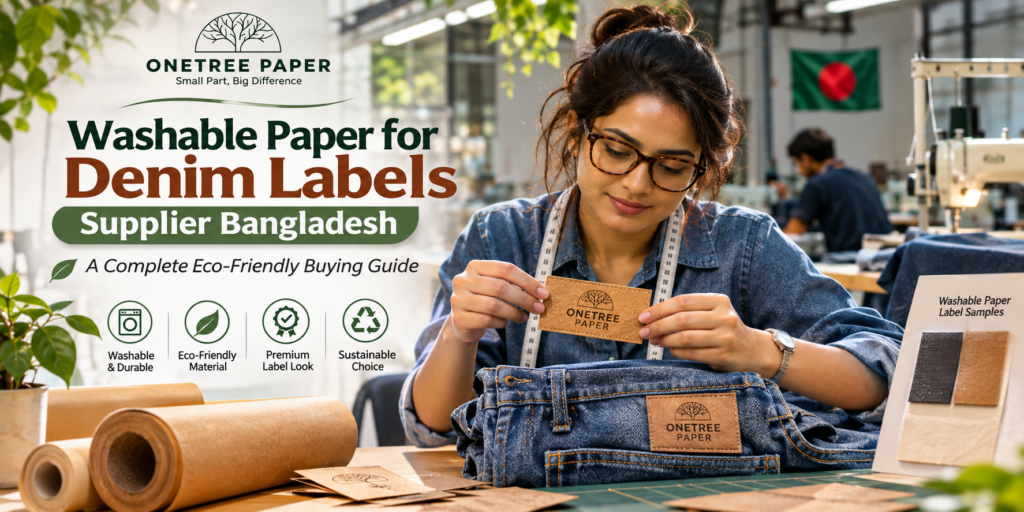
If you make jeans in Bangladesh, you want trims that look premium, survive the wash, and don’t hurt the planet. That is why more brands are looking for a washable paper for denim labels supplier Bangladesh can offer at scale. Washable paper looks like leather, feels like fabric, and is made from natural fibers.
This guide shows you how to choose the right material and the right partner. You will also learn how eco friendly paper protects forests and how OneTreePaper supports a tree-saving approach to paper.
What Is Washable Paper for Denim Labels?
Washable paper is a tough, fabric-like material made mostly from cellulose fibers. Makers treat it so it can be sewn, printed, cut, and washed like fabric. Many people call it washable kraft paper.
It looks like paper when new. After a few washes, it softens and gains a leather-like, vintage feel. This look fits denim very well.
Common Uses in Denim
You will often see washable paper used for:
- Waist patches on the back of jeans
- Hang tags and care labels
- Pocket flashers and small branding patches
- Jacket and bag labels
- Packaging inserts and brand cards
Key Features
- Water-resistant and wash-friendly after proper treatment
- Tear-resistant, so stitching holds firm
- Easy to print with logos, text, and patterns
- Can be laser cut, embossed, or debossed
- Lightweight, which helps lower shipping weight
- Plastic-free options available
Washable paper is not the same as ordinary paper. Normal paper falls apart in water. Washable paper holds its shape through repeated washing cycles when it is made well.
Why Bangladesh Is a Smart Place to Source
Bangladesh is one of the world’s leading garment exporters. The ready-made garment (RMG) sector drives most of the country’s export earnings. Denim is a major part of that story, with large mills and factories around Gazipur, Narayanganj, Savar, Dhaka, and Chattogram.
When you buy locally, you gain real advantages.
- Shorter lead times. Labels reach the factory in days, not weeks.
- Lower freight cost. Less distance means fewer emissions.
- Easy communication. You can visit the supplier and check samples fast.
- Better coordination. Trims arrive on time for cutting and sewing.
- Support for local jobs. Your order strengthens the local supply chain.
A local washable paper for denim labels supplier Bangladesh brands depend on can also match your production plan. This matters when you run tight shipping calendars for global buyers.
The Environmental Impact of Paper
Before you pick a label material, understand the bigger picture. The environmental impact of paper is larger than most people think.
Paper and Deforestation
Paper production uses wood pulp. A commonly cited estimate says humans cut around 4 billion trees each year for paper and paper products. Forests store carbon, shelter wildlife, protect water, and support millions of livelihoods. When forests shrink, all of that is at risk.
Paper also needs a lot of energy and water to produce. Mills that rely on virgin pulp add to greenhouse gas emissions. Bleaching can add chemical pollution if the mill does not manage it well.
Paper Waste in the Garment Industry
Garment factories use huge volumes of paper trims. These include:
- Hang tags
- Care and size labels
- Stickers and barcodes
- Packing cards and tissue
- Cartons and polybags with paper inserts
Much of this ends up as waste after the clothes reach the shop. Tags get cut off and thrown away. Brands that want to reduce paper waste need to think about every trim.
Why Labels Matter
A single label looks small. But a factory may produce hundreds of thousands of jeans each month. Choosing sustainable paper products for labels cuts impact at scale. It also tells your customers you care.
Quote to remember: “The greatest threat to our planet is the belief that someone else will save it.” — attributed to Robert Swan
Your trim choices are a simple, practical way to act.
Recycled Paper Benefits for Denim Labels
Using recycled fibers is one of the easiest ways to cut your footprint. Here are the main recycled paper benefits for your denim line.
1. Fewer Trees Cut
Recycled content replaces part of the virgin wood pulp. That means less pressure on forests. This is the core idea behind tree saving paper.
2. Lower Energy and Water Use
Studies commonly report that recycled paper takes less energy and water to make than paper from virgin pulp. Exact numbers vary by mill. The direction is clear: recycling uses fewer resources.
3. Less Landfill Waste
Paper that goes into landfills can release methane as it breaks down. Recycling keeps paper in use longer. This helps reduce paper waste and lowers emissions.
4. Stronger Brand Story
Shoppers care about where products come from. A label that says “made with recycled fibers” supports your sustainability claims. It adds trust.
5. Buyer Compliance
Many global brands now ask suppliers for eco data. They want recycled content, certified fibers, and safer chemicals. Using eco friendly paper helps you pass these checks and win repeat orders.
6. Plastic Reduction
Many patches use PVC, PU, or silicone. Washable paper can replace some of these. That means fewer plastics in your product and in the wash.
How OneTreePaper Helps Save Trees
OneTreePaper stands for a simple idea: every sheet of paper should respect the tree it came from. The brand promotes sustainable paper solutions that aim to cut waste, support recycled content, and protect forests.
Here is how this approach helps your denim business and the planet.
Promoting Recycled and Responsible Fibers
OneTreePaper focuses on eco friendly paper options. By favoring recycled fibers and responsibly sourced material, it helps lower demand for virgin wood. This is how tree saving paper works in practice.
Encouraging Smarter Paper Use
The best paper is the paper you do not waste. OneTreePaper encourages efficient design and right-sized labels. Smaller labels, better layouts, and fewer extra tags all cut waste.
Supporting Sustainable Paper Products
Beyond labels, a sustainable paper approach covers packaging, hang tags, inserts, and office paper. When you align all of these, your whole brand becomes greener.
Building Environmental Awareness
OneTreePaper also supports awareness. When buyers, designers, and factory teams learn the environmental impact of paper, they make better choices. Small habits, repeated daily, create large change.
Tip: Ask any supplier, including OneTreePaper, for written details on fiber source, recycled content, and certifications. Good partners share this openly.
Washable Paper vs. Other Label Materials
How does washable paper compare with the usual options? This table helps you decide.
| Feature | Washable Paper | Genuine Leather | PU/Faux Leather | PVC/Silicone Patch | Woven Label |
|---|---|---|---|---|---|
| Look on denim | Soft, vintage, leather-like | Premium, classic | Smooth, synthetic | Glossy, modern | Textile, detailed |
| Wash durability | Good when properly made | Good, can stiffen | Can crack over time | Very high | Very high |
| Eco profile | Plant-based, recyclable options | Animal-based, tanning impact | Plastic-based | Plastic-based | Often polyester |
| Vegan-friendly | Yes | No | Yes | Yes | Yes |
| Cost | Low to medium | High | Low to medium | Medium | Medium |
| Customization | Print, emboss, laser cut | Emboss, laser | Emboss | Mold | Weave |
| Tree-saving potential | High with recycled fiber | Not applicable | Not applicable | Not applicable | Not applicable |
Takeaway: Washable paper gives a premium look at a fair price, and it fits an eco-first brand story better than plastic options.
How to Choose a Washable Paper for Denim Labels Supplier in Bangladesh
Now to the practical part. Follow these steps to find a reliable washable paper for denim labels supplier Bangladesh factories can trust.
Step 1: Define Your Label Needs
Before you contact anyone, write down:
- Label size and shape
- Thickness (GSM or mm)
- Color and finish
- Printing or embossing method
- Expected order volume
- Buyer requirements (recycled content, certifications, restricted substances)
Clear specs save time and prevent costly errors.
Step 2: Check the Material and Fiber Source
Ask the supplier where the fibers come from. A good sustainable paper products partner will explain:
- How much recycled content the paper has
- Whether the virgin fibers come from certified forests
- What binders or coatings are used
- Whether the paper is free from harmful chemicals
Look for FSC-certified paper or similar proof when virgin fibers are used. FSC stands for Forest Stewardship Council, and its mark shows responsible forest management.
Step 3: Test Wash Durability
Never trust claims without testing. Ask for samples and run your own wash test.
A simple test plan:
- Sew the sample patch onto a denim swatch.
- Wash it at your standard cycle and temperature.
- Repeat for 5, 10, and 20 cycles.
- Check edges, color, print, and stitching.
- Record any peeling, fading, or tearing.
Also ask for lab reports. Common tests include wash fastness, rub fastness, and tear strength. Your buyer may also require tests tied to standards such as ISO colorfastness methods.
Step 4: Verify Certifications and Compliance
Ask the supplier about:
- FSC or PEFC certification for fiber sourcing
- OEKO-TEX or similar safety standards
- REACH compliance for chemicals, if you export to Europe
- Buyer-specific restricted substance lists (RSL)
Certificates protect you from compliance problems at the port or in the shop.
Step 5: Review Printing and Finishing Options
Your label must carry your brand clearly. Ask about:
- Screen, digital, or heat-transfer printing
- Embossing and debossing for a premium feel
- Laser cutting for clean shapes
- Hot foil for logos
- Edge finishing to prevent fraying
Ask to see real printed samples, not only photos.
Step 6: Ask About MOQ, Lead Time, and Price
Compare at least three suppliers. Look at:
- Minimum order quantity (MOQ)
- Sampling time and cost
- Production lead time
- Payment terms
- Delivery to your factory location
The cheapest option is not always the best. A failed label can ruin a whole shipment of jeans.
Step 7: Visit or Audit the Supplier
If you can, visit the factory. Check cleanliness, waste handling, safety, and quality control. Ask how they manage scrap paper. A supplier that recycles offcuts shows real commitment to sustainability.
Step 8: Start With a Pilot Order
Begin with a small run. Test it in production and in the wash. If it passes, scale up. This protects your budget and your reputation.
Design and Printing Tips for Washable Paper Labels
A great label combines good design with smart material use. Follow these tips.
Keep Designs Simple and Bold
Fine lines and tiny text can blur after washing. Use clear fonts and strong shapes. Aim for readable text at small sizes.
Choose Colors Wisely
Earth tones, black, and deep blue look great on denim. Pale colors may fade. Test any bright color before bulk production.
Use Embossing for Depth
A pressed or embossed logo adds premium feel without extra ink. It also cuts the amount of print needed.
Right-Size Your Label
Bigger is not always better. A well-sized label saves paper, lowers cost, and reduces waste. This is a simple way to reduce paper waste at the design stage.
Plan Stitch Lines
Leave a small border so stitching does not hit the print. Use strong thread and the right needle size. Test stitch density to prevent tearing.
Use Eco Inks
Water-based or low-impact inks are safer for workers and the environment. Ask your supplier what inks they use.
Care and Washing Guidelines for Washable Paper Labels
Even strong labels last longer with good care. Share these tips with your factory and your customers.
- Wash inside out when possible.
- Use cold or warm water instead of very hot water.
- Choose a gentle cycle for premium products.
- Avoid heavy bleach and harsh chemicals.
- Do not iron directly on the label.
- Air dry or tumble dry on low heat.
Softening and light wrinkling are normal. Many people like this aged look on denim.
Building a Sustainable Paper Strategy for Your Denim Brand
Labels are one part of a bigger plan. Use these ideas to make your whole operation greener.
In the Factory
- Collect and recycle paper offcuts.
- Use both sides of office paper.
- Go digital for orders, approvals, and invoices.
- Train staff on paper waste reduction.
In Packaging
- Use recycled cartons and tissue.
- Remove unnecessary inserts.
- Choose plastic-free tape and mailers where possible.
In the Office
A sustainable office setup is easy to start:
- Set printers to double-sided by default.
- Use recycled office paper.
- Place clear recycling bins in every work area.
- Share reports as PDFs instead of printouts.
In Marketing
Tell your story honestly. Explain how your labels use eco friendly paper and how that saves trees. Avoid vague claims. Share facts, certificates, and numbers when you have them.
Common Mistakes to Avoid
Many buyers run into the same problems. Avoid these.
- Skipping wash tests. Samples may look great but fail after ten washes.
- Ignoring certifications. Missing papers can delay shipments.
- Choosing on price alone. Cheap material can cost you more in rejects.
- Over-designing. Heavy ink and tiny details wear off fast.
- Forgetting buyer rules. Always check the brand’s trim and chemical requirements.
- Greenwashing. Do not claim “eco” without proof. Customers and regulators notice.
Key Takeaways
- Washable paper gives denim a leather-like look with a plant-based, plastic-free feel.
- Choosing a local washable paper for denim labels supplier Bangladesh brands trust saves time, freight, and emissions.
- Recycled paper benefits include fewer trees cut, lower resource use, and less waste.
- OneTreePaper promotes tree-saving, sustainable paper solutions and better awareness of the environmental impact of paper.
- Always test samples, check certifications, and start with a pilot order.
- Smart design and right-sized labels help reduce paper waste.
Frequently Asked Questions (FAQs)
What is washable paper used for in denim?
It is used for waist patches, hang tags, care labels, and branding patches on jeans, jackets, and bags. It gives a leather-like look without leather.
Is washable paper really eco-friendly?
It can be. Washable paper is made from natural cellulose fibers. It becomes more eco-friendly when it uses recycled content, certified fibers, and safe inks. Always ask the supplier for proof.
How many washes can washable paper labels survive?
Quality varies. Good washable paper can handle many wash cycles with gentle care. Always run your own test with your actual wash process before ordering in bulk.
Can washable paper replace leather patches?
Yes, in many cases. It offers a similar vintage look at a lower cost. It also suits vegan and animal-free brand lines.
Where can I find a washable paper for denim labels supplier in Bangladesh?
Look in garment trim hubs around Dhaka, Gazipur, Narayanganj, and Chattogram. Compare several suppliers, ask for samples, and check certifications. Also research eco-focused paper brands like OneTreePaper for sustainable paper ideas.
What is the minimum order for washable paper labels?
MOQ depends on size, print, and supplier. Many suppliers offer smaller trial runs. Ask early so you can plan your budget.
Does recycled paper look worse than normal paper?
No. Modern recycled paper can look clean, strong, and attractive. Recycled fibers also add natural texture that suits denim.
How does tree saving paper help the environment?
Tree saving paper uses recycled or responsibly sourced fibers. This lowers demand for virgin wood, protects forests, and helps store carbon.
Conclusion
Your denim labels are small, but their impact is big. Every patch, tag, and care label carries your brand message. It also carries an environmental cost.
By choosing a trusted washable paper for denim labels supplier Bangladesh offers, you get strong, stylish, and wash-ready trims. By choosing eco friendly paper with recycled fibers, you help protect forests and reduce paper waste. And by learning from sustainability-focused brands like OneTreePaper, you build a business that cares about people and planet.
Start small. Test samples. Ask smart questions. Then scale with confidence.
Call to Action
Ready to switch to sustainable denim labels? Contact OneTreePaper today to explore tree saving paper and sustainable paper products for your next collection. Request samples, run your wash tests, and take the first step toward a greener denim brand. Every label you choose can help save a tree.